
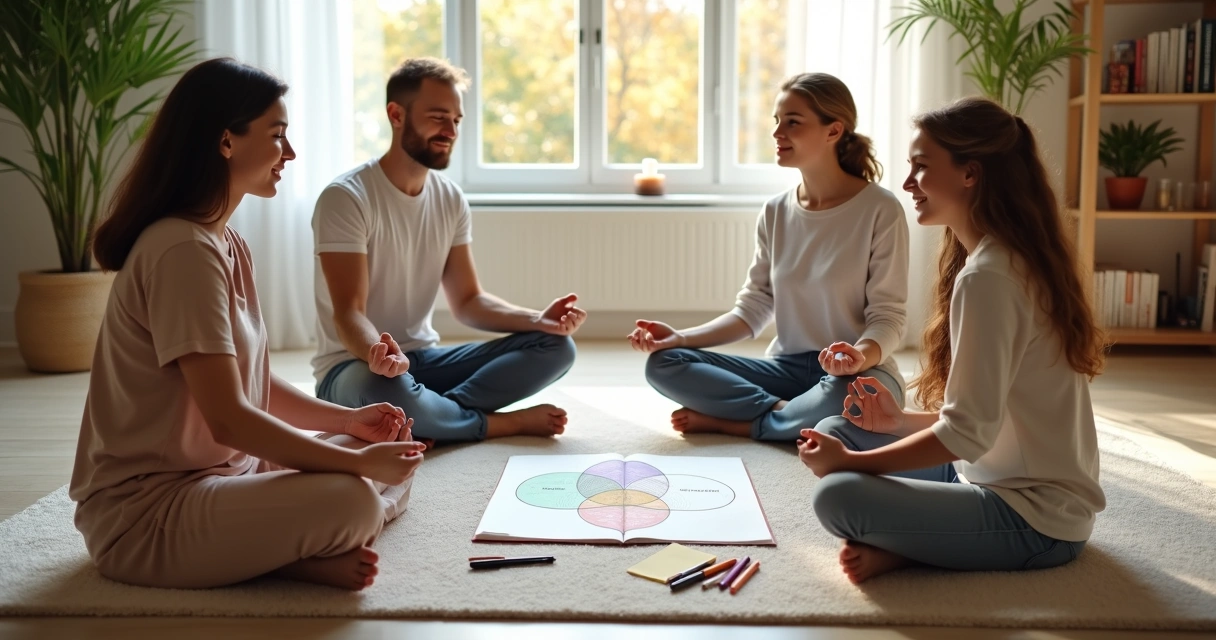
At home, change is often a quiet process. We see it in the way children grow, in how our relationships shift, and in how we respond to the same issue differently over time. Most of us wish for a simple way to make personal and family growth intentional, not just accidental. Recognizing and applying “evolutionary levels” can bring more awareness, direction, and connection to our daily lives. In our experience, this isn’t about adding rules or pressure, but about noticing the small stages of growth—then building habits that support each one.
Understanding evolutionary levels
To use evolutionary levels at home, first we need to understand what they are. These levels represent the stages through which individuals, families, and even relationships can grow. As we move through these stages, we gain more clarity, emotional stability, and conscious action.
Instead of seeing change as an unclear or overwhelming process, evolutionary levels reveal clear steps that guide personal and shared development.
Imagine a staircase, each step representing a phase where new abilities are developed. Some common indicators might include:
- Increased self-awareness
- Greater emotional balance
- Clearer sense of purpose
- Improved communication
- More fulfilling relationships
These levels are not fixed or exclusive. We often move between them or focus on different areas at different times. The key is learning how to recognize where we are, then choosing simple practices that promote the next step.
Spotting evolutionary levels in daily life
We have found that families often move through these stages together, but not always at the same pace. It is not about comparison, but about support. Spotting evolutionary stages requires honest observation. Some signs might include:
- Children moving from expressing needs with tears to using words
- Partners moving from reactive arguments to reflective conversations
- Family members going from acting out of habit to acting with intent
If we pay attention, these shifts become visible.
Notice the small changes; they matter most.
The point is not to assess or judge, but to witness change with care and patience.
Simple ways to work with evolutionary levels at home
It may seem complex at first, but incorporating growth stages into family life often comes down to a few repeatable habits.
Try regular reflection moments
Reflection is a quiet, powerful habit. We set aside time each week—even if it’s just 15 minutes—to talk about personal challenges, wins, and patterns. Sometimes it’s over dinner. Other times it’s during a calm walk. We ask questions like:
- What did I learn about myself this week?
- How did I react to stress?
- Was there a moment when I acted differently than usual?
These simple questions highlight where we are in our own growth.
Use practical feedback, not criticism
Feedback is most helpful when given kindly and received openly. Instead of focusing on mistakes, we try to point out moments of growth or brave effort. If a child calms down after being frustrated, we say, “I saw you try to breathe and speak your feelings—great job!” Adults benefit from the same recognition. Growth is a process, and encouragement makes it easier for everyone to notice and continue moving forward.
Set small, intentional challenges
Each stage may need a different kind of challenge to foster development. We identify one new action for each person or as a family. Examples:
- For young children: sharing a toy for five extra minutes
- For parents: active listening without interruption for half a dinner conversation
- For the whole family: a weekly gratitude circle
These little shifts support the next level, and doing them together turns growth into a shared experience.
Emotional naming for all ages
We notice that emotional awareness is often the gateway to new levels of maturity. Naming what we feel, aloud or in writing, stops emotions from becoming chaos. For children, this might be identifying “sad,” “frustrated,” or “curious.” Adults can go further: “I feel dismissed,” or “I notice I withdraw when I’m tired.” The rule is simplicity—no need for therapy speak, just honest naming.
Model conscious conflict resolution
Arguments, disagreements, and hurt feelings are a natural part of any home. We see them as chances to practice what we hope to grow into: patience, empathy, and repair. When we make mistakes, we own up and show how to apologize. When others struggle, we listen more and guide, not scold. Over time, conflict shifts from something to avoid to something we all can manage with more care.
The benefits of bringing evolutionary levels into home life
Through our work, we often hear relief when people realize that growth at home is possible without perfection. Real transformation is possible over time, not overnight. As we keep practicing, a few things happen:
- Family members become more willing to talk about their needs and feelings
- People accept that setbacks are part of the process
- A sense of belonging and safety increases
We believe that when these small changes add up, home becomes more than a place to live. It becomes where real, positive development happens together.
Keys for success
As practical as these steps sound, sticking to them does not mean never making mistakes. In our experience, the keys to long-lasting use of evolutionary levels are:
- Gentle persistence—don’t expect sudden transformations
- Genuine curiosity—keep asking “What can we do differently next time?”
- Shared reflection—invite everyone’s voice, young and old
- Self-compassion—give yourself permission to grow at your pace
Even small, consistent actions open a path to new understanding and connection.
Growth at home is a series of small, honest steps.
Conclusion
In practice, we have found that using evolutionary levels at home means seeing our daily lives as the setting for meaningful change. Each conversation, misunderstanding, or kind gesture holds the potential for moving to a new phase. We encourage families to keep things simple: observe openly, speak gently, and celebrate progress—no matter how small. Over time, these habits make our homes more connected, resilient, and alive with possibility.
Frequently asked questions
What are evolutionary levels at home?
Evolutionary levels at home are stages of growth that individuals and families move through together, focused on increased awareness, better communication, and deeper emotional maturity. These levels help us see where we are currently and guide us toward practical steps for positive change.
How can I use evolutionary levels daily?
We suggest integrating reflection moments, kind feedback, emotional naming, and small intentional challenges into daily routines. By noticing how each family member is progressing, discussing emotions openly, and supporting each other’s growth, evolutionary levels become part of daily life, not just something for special occasions.
Is it worth it to apply evolutionary levels?
Yes, applying evolutionary levels can lead to better understanding, improved communication, and more supportive family dynamics. Many people report feeling more connected and less caught up in unhealthy patterns when they use this approach.
Where to learn more about evolutionary levels?
There are books, courses, and discussion groups focused on personal growth, self-awareness, and family development. You can also find practical resources that detail different models of emotional and relational growth. Paying attention to credible educational resources will help deepen understanding and offer step-by-step guidance for use at home.
What are the benefits of using evolutionary levels?
The benefits include clearer self-understanding, stronger relationships, and a more peaceful home life. Over time, these levels help reduce conflict, support emotional steadiness, and encourage everyone in the home to grow in their own way.