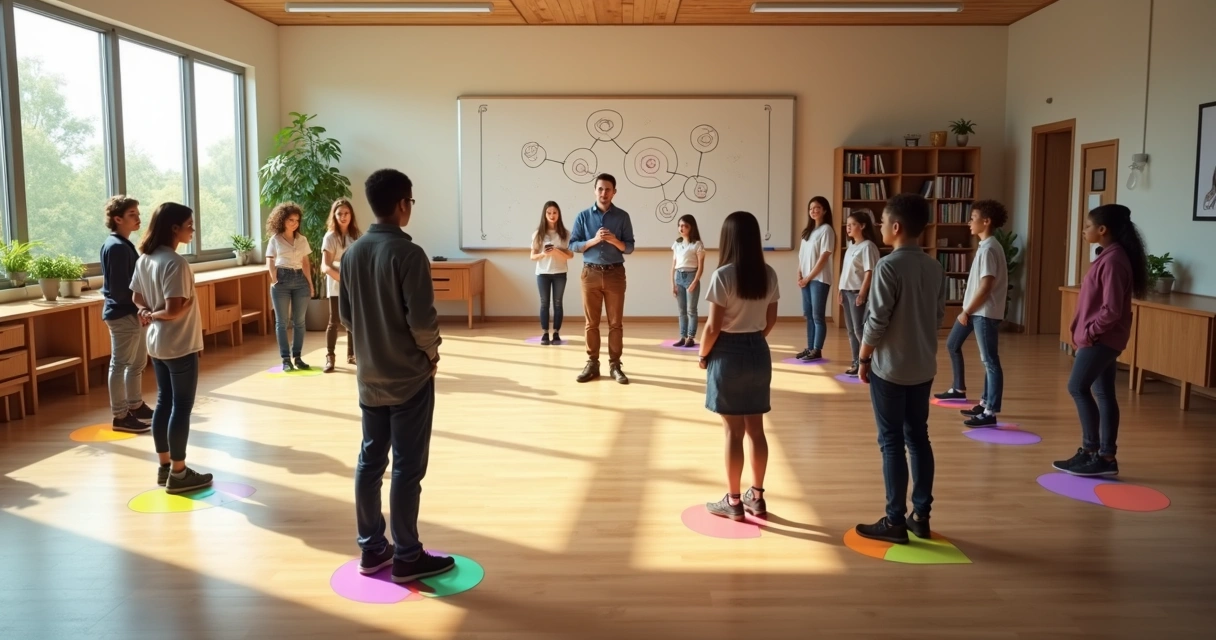
Systemic group reflections can bring clarity to a team, a family, or any shared space. They help us see patterns, hidden tensions, and repeated reactions that one person alone may miss. Still, when the process is rushed or poorly held, reflection turns into confusion, defensiveness, or noise.
We have seen this happen in very ordinary settings. A group gathers with good intent. Someone speaks with honesty. Another person reacts too fast. Soon, the room is no longer reflecting. It is protecting, arguing, or trying to fix.
Good reflection is not just talking together. It is learning to see what is shaping the group.
When we treat systemic reflection with care, it becomes a place of insight and responsibility. Below, we share seven mistakes to avoid if we want these moments to produce real understanding instead of emotional clutter.
Mistake 1: Starting without a shared purpose
Many groups begin reflection because something feels off. That can be honest, but it is not enough. If we do not name the purpose, people enter with different expectations. One wants healing. Another wants answers. Another wants to be heard at last.
This creates friction from the first minutes.
A simple opening helps a lot. We can define whether the group is there to understand a pattern, process a recent event, or listen without trying to solve. That shared frame reduces projection and helps people stay close to the same topic.
Clarity calms the room.
Without purpose, reflection becomes vague. With purpose, it becomes grounded.
Mistake 2: Confusing reflection with debate
We often notice that people enter reflective spaces carrying debate habits. They listen to reply, defend a position, or prove a point. This changes the tone of the whole group. Reflection asks for curiosity. Debate asks for victory.
Systemic reflection works best when we seek patterns, not winners.
One practical way to avoid this mistake is to slow the pace of responses. Instead of replying at once, the group can pause and ask:
What are we hearing beneath the words?
What keeps repeating in this situation?
What part of this belongs to the group, not just one person?
These questions shift attention from blame to structure. In our experience, that one shift changes the quality of the whole conversation.
Mistake 3: Letting one voice dominate the space
Some people speak more because they think fast. Others speak less because they need time. In systemic work, both rhythms matter. If one voice takes too much space, the group starts orbiting around one perspective. Then reflection narrows.
We once observed a group where one person spoke with great confidence. Everything sounded clear. But after a few quiet members finally spoke, the picture changed. What seemed like a personal issue was actually a long-standing group pattern no one had named.
That moment was simple. And very telling.
To prevent dominance, we can create basic agreements:
Speak briefly before speaking again.
Leave room for silence.
Invite quieter members without pressure.
Notice who has not been heard yet.
Balanced participation does not mean equal speaking time every minute. It means the group protects access to truth from more than one angle.
Mistake 4: Moving too quickly to advice or solutions
This is one of the most common errors. A hard story appears, and the group wants to help. The intent is kind, but speed can block insight. Advice often arrives before the group has understood the pattern that created the problem.
When we rush to solve, we may avoid seeing what needs to be faced.
Reflection is not passive. It is disciplined observation. Before offering solutions, we can stay with a few deeper questions:
What is this situation trying to show us?
What reaction keeps repeating?
What has been avoided until now?
Sometimes the strongest help is not advice. It is helping the group remain present long enough for a fuller picture to appear.
Mistake 5: Ignoring the emotional field
Groups do not reflect only through words. Tone, pauses, tension, and silence all carry meaning. If we focus only on content, we miss half the room.
For example, a group may say it is discussing trust, yet everyone speaks in careful, controlled language. No one interrupts. No one asks direct questions. On the surface, things look respectful. Underneath, there may be fear.
We think emotional signals should not be dramatized, but they should not be ignored either. A grounded facilitator or participant can gently name what is present. Something as simple as, “We seem careful right now,” can open space without forcing anyone.
Silence also speaks.
When the emotional field is seen, the group becomes more honest. Not louder. More honest.
Mistake 6: Personalizing what is systemic
This mistake can hurt people and delay learning. In many groups, one person becomes “the problem.” The focus stays on their behavior, their tone, or their history. But in systemic reflection, we ask a wider question: what is this person expressing for the whole group?
That does not remove personal responsibility. It places it in context.
A recurring outburst, withdrawal, or conflict may reflect unspoken rules, old loyalty patterns, poor boundaries, or shared avoidance. If we reduce all of that to one individual, the system stays hidden.
It helps to shift language. Instead of saying, “You always create tension,” we can say, “Tension seems to rise in this type of moment. What happens to all of us here?” That one change reduces accusation and opens collective awareness.
Mistake 7: Ending without integration
Some of the hardest reflective meetings are not the loud ones. They are the ones that end too neatly. People say, “This was good,” and leave with no clear sense of what was learned, what changed, or what needs care next.
Reflection becomes useful when insight is named and carried into action.
Integration does not need to be complex. It can include:
One sentence on what the group has seen more clearly.
One limit or pattern that needs attention.
One next step in behavior, not just intention.
We find this part very human. People often relax when learning is put into plain words. The room feels less open-ended. More settled.
Conclusion
Systemic group reflections ask more of us than opinion sharing. They ask for patience, structure, honesty, and the willingness to see beyond the obvious. When we avoid these seven mistakes, the group becomes more able to recognize what is happening beneath the surface.
That is where reflection starts to matter. Not when everyone agrees, but when everyone can see with more truth. From there, action becomes cleaner, relationships become less reactive, and the group can mature without forcing a false harmony.
Frequently asked questions
What are systemic group reflections?
Systemic group reflections are shared moments of observation and meaning-making in which we look at patterns, roles, reactions, and relationships inside a group. The aim is not only to hear individual opinions, but to understand how the whole system influences behavior, tension, and choice.
How to avoid common reflection mistakes?
We can avoid common mistakes by setting a clear purpose, slowing reactions, making room for different voices, and resisting the urge to fix everything too fast. It also helps to notice emotional tone, use non-accusing language, and end with a clear insight or next step.
Why do group reflections sometimes fail?
Group reflections often fail when people confuse them with debate, bring hidden agendas, or stay only at the surface of the issue. They also fail when the group avoids discomfort, blames one person for a wider pattern, or leaves the conversation without integration.
What makes reflections more effective?
Reflections become more effective when the group feels safe enough to be honest and structured enough to stay focused. Clear intention, active listening, emotional awareness, shared responsibility, and grounded follow-through all improve the quality of the process.
How often should groups reflect together?
The best rhythm depends on the group’s context, but regular reflection usually works better than waiting for a crisis. Some groups benefit from monthly reflection, while others need shorter and more frequent pauses. What matters most is consistency and enough time to turn insight into practice.