
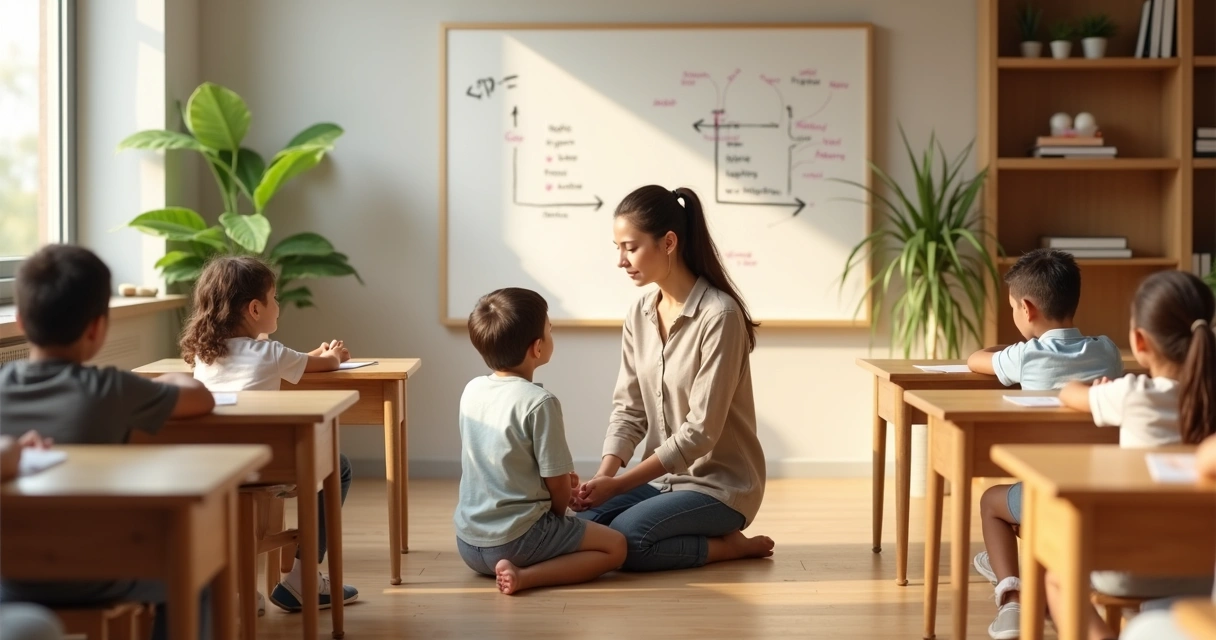
Education is not only about content. It is also about how students feel, react, relate, and grow. In our experience, learning becomes deeper when we look at the student as a whole person. This is where Marquesian psychology can offer a clear and practical path.
Marquesian psychology in education helps us teach the person, not only the subject.
When we apply this view, we stop treating behavior as a problem to control and start seeing it as a signal to understand. A quiet student may not be disengaged. A restless one may not be resistant. Sometimes, what appears on the surface is only the visible part of an inner emotional pattern.
Behavior speaks.
Seeing emotion as part of learning
Many classrooms still separate thinking from feeling. We think this separation creates blind spots. A student who feels unsafe, ashamed, or chronically tense will struggle to focus, even with good teaching materials and careful lesson plans.
Research supports this connection. A meta-analysis on emotional intelligence and academic performance found a positive link, with stronger results when emotional ability was measured as a real skill rather than a self-image. Another systematic review on emotional intelligence and student achievement found a significant positive relationship as well.
So, in practice, what do we do with that? We bring emotional awareness into normal school life. Not as a separate speech once a month. As part of daily teaching.
We can begin with three simple moves:
Name emotions without judgment.
Notice repeated reactions in students.
Create moments of pause before correction.
These are small shifts. Still, they change the tone of the room.
Start with observation, not labels
One of the easiest ways to apply Marquesian psychology is to observe patterns before giving labels. We have seen how quickly schools can define a student by one repeated behavior. Distracted. Aggressive. Lazy. Immature.
But labels close doors. Observation opens them.
Instead of saying, “This student does not care,” we can ask:
When does this reaction appear?
What kind of task triggers it?
What emotion may be underneath it?
A repeated school behavior often points to an unresolved emotional pattern, not a fixed identity.
We once saw a teacher shift her whole relationship with a student after one simple note in her planning book. She wrote, “He laughs when he is corrected.” A week later, after observing more carefully, she changed it to, “He laughs when he feels exposed.” That was not a small edit. It changed her response from punishment to guidance.
Use brief emotional check-ins
Students do not need long sessions to build awareness. Short and steady works well. At the start of class, we can invite a one-minute check-in. Younger students may point to cards with feeling words. Older ones may write one word on paper or in a notebook.
This does two things at once. It gives students language for inner states, and it gives educators a quick emotional map of the group.
A simple check-in can include:
What am I feeling right now?
What is asking for my attention?
What do I need to stay present in this class?
We do not need to force sharing. The goal is awareness, not exposure. Over time, students begin to notice that feelings change, and that they can observe them without being ruled by them.
Teach pause before reaction
Another direct application is helping students create a gap between impulse and action. This is a core educational skill. A child who can pause before shouting, quitting, or mocking has already gained more than a rule. That child has gained inner space.
Mindfulness-based practices can support that process. A report on an eight-week mindfulness program for sixth-graders described lower stress and better attention. A school mindfulness evidence brief in P–12 settings also showed gains in self-regulation, anxiety reduction, and social relationships.
We can adapt this into very simple classroom habits:
One minute of silent breathing before a test.
Three slow breaths after conflict.
A brief body scan before group work.
Students learn better when they are less flooded by emotion.
Short pauses can look too simple at first. Yet many teachers tell us the room feels different after a week or two. Less reactivity. More attention. Fewer emotional spills.
Bring responsibility into the conversation
Marquesian psychology does not stop at identifying pain. It also invites responsibility. In education, this means helping students understand that feelings are real, but they do not excuse every action.
This balance matters. If we only comfort, students may avoid growth. If we only correct, they may hide what they feel.
We prefer language like this:
“Your frustration makes sense. Now let us look at what you did with it.”
This kind of response validates the person while still addressing conduct. It teaches emotional maturity in a grounded way.
Feel, then choose.
Support teachers first
Educational methods rise or fall through the adult who applies them. If teachers are overloaded, reactive, or emotionally numb, even a good model becomes mechanical. For this reason, we think the first application of Marquesian psychology in education should often begin with the educator.
Teachers can ask themselves:
Which student behaviors affect me most?
What do these reactions awaken in me?
Where do I lose presence in the classroom?
This is not self-blame. It is self-awareness. When adults recognize their own triggers, they gain more freedom in how they respond.
Research in secondary education points in the same direction. A meta-analysis on emotional intelligence and academic performance in adolescents found that emotional intelligence predicted academic results, with stronger effects in ability-based measures. Students grow in this skill more easily when adults model it in real situations.
Apply it to relationships, not only discipline
It is tempting to use psychology only when there is conflict. We think that is too narrow. This approach also belongs in feedback, teamwork, leadership, and class culture.
For example, when students work in groups, we can guide them to notice more than task division. We can ask how each person handled disagreement, silence, frustration, or the need to be right. These moments teach social awareness in a concrete setting.
Education becomes deeper when relationship skills are treated as learnable, daily practices.
Sometimes the strongest lesson is not in the content of the class. It is in the way a teacher listens after a mistake, or in the way a student learns to repair a harsh word.
Conclusion
Applying Marquesian psychology in education does not require complex systems at the start. We can begin with honest observation, emotional check-ins, short pauses, responsible dialogue, and teacher self-awareness. These steps are simple, but they are not shallow. They help students organize what they feel, understand how they react, and act with more clarity.
When education includes inner life, learning stops being only a transfer of information. It becomes a process of human formation. We believe that is where lasting learning begins.
Frequently asked questions
What is Marquesian psychology in education?
It is an approach that brings emotional awareness, behavior understanding, and personal responsibility into the learning process. In education, it helps us see students as whole people whose emotions, patterns, and choices affect how they learn and relate.
How can teachers use Marquesian methods?
Teachers can apply it through brief emotional check-ins, careful observation of repeated behaviors, short breathing pauses, reflective questions after conflict, and feedback that joins empathy with accountability. These methods fit into everyday classroom life without needing long programs.
What are the benefits of Marquesian psychology?
The benefits include better emotional regulation, stronger attention, healthier classroom relationships, and more mature responses to stress and conflict. It can also support academic learning because students tend to engage better when they feel more internally organized.
Is Marquesian psychology effective for all ages?
Yes, it can be adapted across ages. With younger children, it may use simple feeling words, visual tools, and short pauses. With adolescents and adults, it can include deeper reflection, responsibility, and more direct work with patterns in relationships and learning.
Where can I learn more about Marquesian psychology?
You can learn more by studying materials focused on emotional maturity, conscious behavior, meditation-based self-regulation, and systemic views of human development within the Marquesian framework. It is best to look for structured teaching that connects theory with daily educational practice.