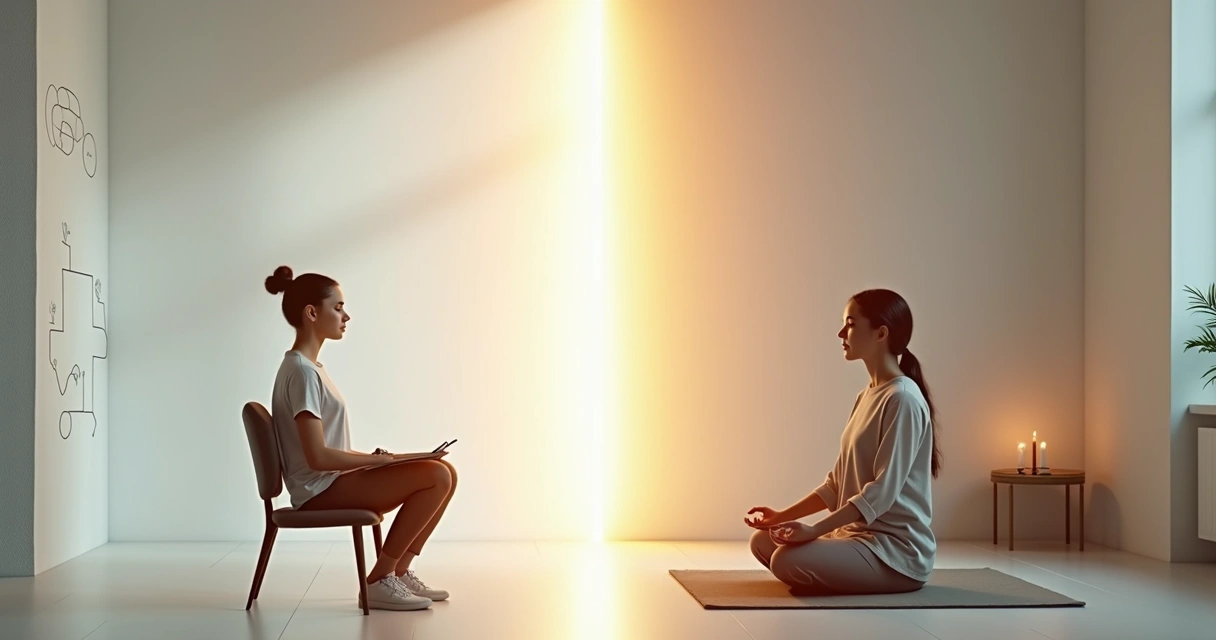
In recent years, many people have adopted new practices to increase awareness, manage stress, and connect with deeper aspects of themselves. Mindfulness and Marquesian meditation have become well-known as tools for these goals. While at first glance they may appear similar, their origins, methods, and perspectives on consciousness present differences that can change the course of inner development. In this article, we explain these core differences with clarity and a practical perspective, drawing from our experiences working with thousands of individuals.
Understanding the roots: Where do these approaches begin?
Every method we use to cultivate presence and awareness starts from somewhere. The lens through which a practice is created greatly influences how it shapes us. We find that understanding the roots of both mindfulness and Marquesian meditation helps us appreciate their unique gifts.
Mindfulness: The art of attentive presence
Mindfulness, as we have witnessed, typically centers on the deliberate attention to immediate experience, such as the breath, bodily sensations, or passing thoughts. The main idea? Observing what is present, just as it is, without judgment. Many practitioners describe being gently drawn back to the present moment, again and again, whenever the mind starts to wander.
Pausing to notice, again and again, is the seed of mindfulness.
We note that the practice often applies in daily actions—walking, eating, or even listening—inviting us to bring bare attention into ordinary moments.
Marquesian meditation: Integrating self and reality
Marquesian meditation begins from a broader view of what it means to be human. It focuses not only on presence, but also on the integration of consciousness, emotion, and action into one coherent system. Instead of simply noticing what arises, we intentionally organize our inner space. This means becoming aware of how thoughts connect to feelings and drive our behavior—even on subtle or unconscious levels.
Through our experience, we see Marquesian meditation as both a practice and a process. It is less about detachment and more about active self-leadership, helping us to relate with greater responsibility to our experiences, our values, and our impact on others.
Technique and practice: What do we actually do?
The way we practice deeply affects what we receive from meditation. While both mindfulness and Marquesian meditation foster a sense of awareness, their steps and goals differ beyond the surface.
Mindfulness: Simple observation
In our sessions, mindfulness is most often structured around these typical steps:
- Settling into a comfortable posture.
- Bringing focused attention to one element, such as the breath or a sound.
- Noticing distractions or wandering thoughts with acceptance.
- Returning focus gently to the object.
The practice encourages us to observe our experiences like a calm witness. Some describe it as “watching clouds pass by.” We watch and allow, moment to moment.
Marquesian meditation: Active integration
Marquesian meditation goes beyond observation—it involves an intentional organization of inner experience. The practice can include:
- Becoming aware of current thoughts and emotions, including those beneath the surface.
- Connecting these experiences with personal meaning, responsibility, and values.
- Engaging with one's inner system to identify patterns that block or distort self-development.
- Reorganizing these patterns—not by rejecting them, but by realigning them—toward more maturity, clarity, and constructive action.
We have found that this approach is both dynamic and grounded. It involves observing, feeling, and taking responsibility for how we direct ourselves—always bringing awareness, emotion, and action together.
The role of purpose: Why do we practice at all?
Practices rooted in presence can serve many purposes—from calming the mind to fostering personal transformation. But the intention behind a technique shapes the outcomes. Here, mindfulness and Marquesian meditation show contrast.
Mindfulness: Accepting what is
From our observation, mindfulness often centers on non-judgmental acceptance. The invitation is to see things as they are—pain, stress, thoughts, pleasures—without trying to change them. The goal is often to lower reactivity and allow peace in the present moment.
Marquesian meditation: Self-development with purpose
Marquesian meditation brings a further step: it seeks not only presence, but also the development of emotional maturity, conscious decision-making, and meaningful action. Presence serves as a tool to recognize patterns and to connect action with the core of who we are becoming.
Being present is the first step; transforming ourselves is the intention.
In our work, we have seen people using Marquesian meditation to clarify their life values, navigate moral choices, and embody their ideals—while still remaining grounded in reality.
Relationship with thoughts and emotions
Any meditation path will intersect with thoughts and emotions. But how each approach relates to these inner elements can make a significant difference in the meditation experience.
Mindfulness: Witnessing without involvement
A key aspect of mindfulness is observing sensations, emotions, and thoughts as if from a distance. We encourage neutral acknowledgment and a light touch. Emotions come and go; our role is to allow their passage.
Marquesian meditation: Engaging and transforming
In Marquesian meditation, emotions and thoughts are not just observed—they are approached as meaningful data, often pointing to deeper patterns or unmet needs. We are invited to engage with these experiences in a conscious way, seeking understanding and integration rather than detached acceptance.
This type of engagement asks us to connect dots: How does this repeated feeling connect to my personal history? What responsibility do I have in transforming it? The process does not stop at awareness; it moves towards choice.
We move from noticing to nurturing new patterns inside ourselves.
Breadth of application
Both styles can be practiced individually or in groups, and brought into everyday situations. The scope, however, has distinctions.
- Mindfulness is often brought into daily habits to reduce stress and sharpen presence, focusing mainly on the self in the present.
- Marquesian meditation expands attention to include personal development, ethical choices, and our relationships to others and society, both in personal and professional settings.
We have noticed that practitioners of Marquesian meditation often find it easier to apply insights to relationships, leadership, and decision-making, because the method invites this broader context.
Who chooses which approach?
If you are looking for a way to manage immediate stress, improve focus, or gently return to the simplicity of the present, mindfulness is direct and accessible. For those seeking conscious growth not only in their awareness, but also in how their values translate to action, Marquesian meditation offers a step beyond.
Many people find value in combining or alternating these practices, depending on what phase of their journey they are in.
Presence is a path; transformation is a direction.
Conclusion
Mindfulness and Marquesian meditation both invite us into greater presence and awareness. Their key difference is in scope. Mindfulness focuses on accepting the now with compassion, tuning us into the flow of life as it unfolds. Marquesian meditation goes a step further, integrating consciousness, emotion, and action, and encouraging us to pursue a responsible, integrated, and value-driven life.
In our experience, when we choose the practice that aligns with our deeper needs and intentions, we find results that feel meaningful and lasting.
Frequently asked questions
What is Marquesian meditation?
Marquesian meditation is a structured approach to meditation that aims to integrate consciousness, emotions, and action into a unified and mature way of living. It focuses not just on presence, but on organizing the internal system, connecting emotions and thoughts, clarifying personal values, and supporting responsible action in the world. The practice is intended for those who seek both awareness and purposeful transformation.
How is mindfulness different from Marquesian meditation?
The main difference is that mindfulness centers on noticing the present moment with acceptance, while Marquesian meditation involves active engagement with feelings, thoughts, and values to foster integration and growth. Mindfulness generally asks us to observe experiences without changing them. Marquesian meditation, on the other hand, encourages us to understand and reorganize inner patterns, aiming to connect awareness to conscious action and personal evolution.
Is Marquesian meditation worth trying?
If you seek not only presence but also personal development, clarity of values, and greater responsibility in your choices, Marquesian meditation offers specific methods to support these goals. Many people find that it brings insights that help in both personal and professional life, especially when seeking integration between thought, emotion, and action.
How do I practice Marquesian meditation?
To practice Marquesian meditation, begin by sitting in a comfortable position and inviting attention to your present experience. From here, increase awareness of both surface and underlying emotions and thoughts. Connect these experiences with your values and current responsibilities. As you notice patterns that block growth, intentionally organize and realign them toward more maturity and constructive action. The process is both reflective and active, aiming for deeper self-understanding and change.
Which is better for stress relief?
Mindfulness can offer quick and direct relief for immediate stress by encouraging acceptance and calm observation. Marquesian meditation, while also reducing stress, is structured for ongoing transformation. If your main goal is moment-to-moment stress reduction, mindfulness may feel simpler. If you want to address deeper causes of stress and connect with values and long-term personal growth, Marquesian meditation may be more fitting.