In our current way of life, emotional resilience is more than a skill; it is our anchor. We move through rapid changes, face unexpected moments, and meet uncertainty in many forms. Every day offers challenges that test both our patience and our spirit. Through many years of research and hands-on work, we have learned that practices rooted in presence, clarity, and genuine integration of mind and emotion can make a real difference. Simple practices, when guided by awareness, have the power to change our response to life’s pressures. Meditation, as understood from a Marquesian perspective, is one of those practices.
The meaning of meditation for emotional resilience
Emotional resilience is not about removing stress or avoiding hardship. Instead, it is the living ability to feel, process, and respond to what is present. Simple meditation techniques help us reconnect with ourselves, regulate our inner state, and foster a deep sense of calm even when life is uncertain.
Resilience grows in the quiet moments between thoughts.
When meditation shifts from abstract theory into clear, guided action, its effects move beyond the cushion. We begin to embody resilience in the flow of daily life.
The Marquesian approach: Presence, integration, and reality
For us, meditation is not about escaping the real world. It is about opening our perception of what is happening inside and around us. The Marquesian approach highlights three simple elements that become the base of our meditation:
- Presence: Direct contact with the here and now, senses open, mind focused.
- Integration: Allowing reason, emotion, and body to communicate, rather than split or fight.
- Reality-orientation: Facing what is, rather than what we wish or fear.
These elements shape every practice we share. By returning to them, we set a foundation for emotional maturity and practical calm.
Foundational practices for grounded presence
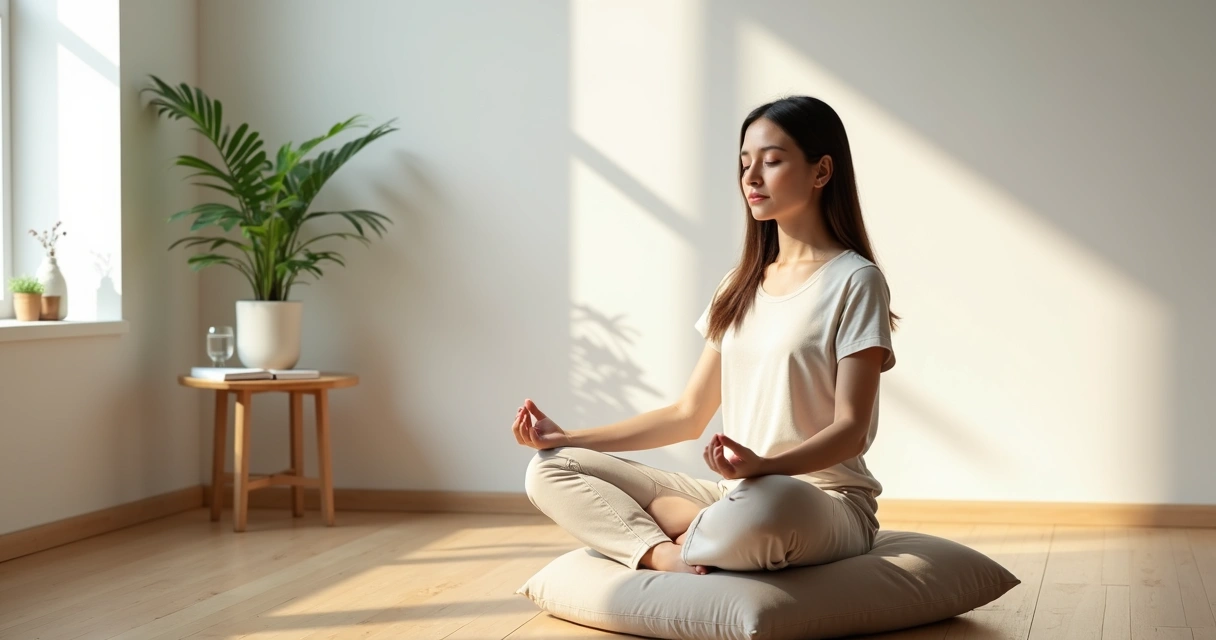
Let us introduce a few simple but effective practices. You do not need special equipment. A chair, a quiet room, or even a moment outdoors can provide the setting.
Anchoring the breath
Breath is always with us. We find that focusing on it brings us quickly into the present moment, offering a practical way to interrupt spirals of worry or reactive emotion. Here is how we practice anchored breathing:
- Sit comfortably with feet flat on the floor.
- Place your hands on your lower belly.
- Close your eyes lightly, or look at a soft spot in front of you.
- Inhale deeply through the nose, feeling the movement under your hands.
- Pause for a count of three, holding the air gently.
- Exhale slowly through the mouth, noticing the release of tension.
- Repeat this cycle for two to five minutes, letting the mind rest on the rhythm of breath.
This small break is often enough to reset our internal state. Over time, it strengthens our capacity to return to balance during moments of stress.
Body scan for emotional awareness
Emotions live in the body before they appear in our mind. Tension in the jaw, tightness in the chest, a knot in the stomach - all can be signals. By gently scanning the body with awareness, we train ourselves to recognize and respect these signs rather than push them away. Here is our method:
- Sit or lie down, allowing the body to rest naturally.
- Start at the top of the head and bring your attention slowly downward.
- Notice areas that feel tense, warm, cool, soft, or heavy.
- If you find discomfort, breathe gently into that area. Do not force change - observe with respect.
- Continue through the face, throat, shoulders, arms, chest, belly, legs, and feet.
- Finish with a broad awareness of the whole body, as it is right now.
Listening to the body is the first step in understanding emotion.
This practice increases the clarity of our inner signals, and with regular use, we become more skillful at reading and responding to ourselves.
Awareness meditation with emotional labeling
Another simple, powerful tool we use is labeling what we feel. When a strong emotion appears, instead of being swept away, we can simply name it:
- Pause.
- Breathe in and out slowly once.
- Silently say, “This is sadness,” or “This is anger,” or whatever the emotion may be.
Naming the feeling brings it into conscious awareness and breaks the cycle of reactivity. The process works best if we approach it with genuine kindness rather than judgment or self-criticism.
Micro–meditations throughout daily life
We have found that five-minute practices are good, but even shorter pauses can create a shift. Micro–meditations insert moments of presence into the busiest days. Here are examples:
- One deep breath before answering a difficult question.
- Noticing the weight of your body in the chair at any meeting.
- Feeling the sensation of your feet as you walk down a hallway.
- Listening to a sound or noticing nearby colors with full attention for ten seconds.
You do not need to stop everything to benefit. These small acts of presence, done with intention, anchor the mind and body. Over time, they add up to greater emotional steadiness.
The internal dialogue: Shifting harshness to support
Much of our stress isn't about what happens outside, but how we speak to ourselves about it. We encourage an open, respectful internal dialogue. When facing a challenge:
- Pause and notice the first thought or judgment that appears.
- Ask, “Is this how I would speak to someone I care for?”
- If not, rephrase the message kindly and truthfully.
This habit softens the sharp edge of inner criticism and increases our emotional flexibility. Many of us notice that resilience grows fastest when we stop fighting our own experience.
Integration: Bringing meditation into action
Resilience is fully tested not in quiet moments, but when life asks us to act. We have observed that meditation is truly successful when it translates into action. To support this transition, we suggest ending each practice with a small step:
- After breathing practice, decide on one thing you would do differently today.
- After body scanning, choose one way to care for your physical state, even if small.
- After emotional labeling, decide how to respond with maturity rather than impulse.
The value of meditation is seen in how we live, not just how we feel.
Even a small, realistic change can bridge the gap between intention and life.
Conclusion
We have seen that simple Marquesian meditation practices can change how we meet challenges. The focus is always on integration, bringing together presence, clarity, and gentle action. We believe that by grounding ourselves in the present, observing our internal landscape, and bringing awareness to small parts of each day, emotional resilience becomes natural. It is not about long hours or perfect technique, but about genuine presence and gentle honesty with ourselves.
Frequently asked questions
What is Marquesian meditation?
Marquesian meditation is an approach focused on integrating consciousness, emotion, and action without detaching from reality. It combines grounded presence, body and breath awareness, and clear observation of thoughts and feelings to support personal growth and maturity.
How to start Marquesian meditation practice?
We recommend beginning with short, simple exercises. Sit comfortably, pay attention to your breath, and allow your awareness to move through your body and emotions. Start with five minutes per day and gently build consistency over time.
Does Marquesian meditation help with stress?
Yes, regular practice supports relaxation, mental clarity, and emotional balance, which together reduce stress responses. By grounding attention in the present and bringing awareness to emotions, we find more calm in everyday challenges.
How often should I meditate for results?
We believe steady, flexible practice works best. Daily short sessions (even five to ten minutes) are more effective than rare, lengthy meditations. Quality and consistency matter most.
Are there simple Marquesian meditation techniques?
Yes, techniques like anchored breathing, body scan, emotional labeling, and micro–meditations can all be practiced with little time and no special equipment. The goal is genuine presence, not complexity.